
Mother’s Day is the one morning of the year when the kitchen becomes a stage. The goal isn’t just food—it’s the experience of watching someone you love sit down to a table that says, without words, you matter, and I took time for this. A plate of golden, paper-thin crêpes with fresh berries and crème fraîche. A perfectly poached egg on a toasted English muffin, draped in silky hollandaise. These are dishes that require patience, precision, and the right equipment.
In this guide, we’ll walk through the techniques that make a Mother’s Day brunch genuinely special—and explain how your glass stovetop and its precise simmer burner are the secret weapons that make delicate cooking achievable for any home cook.
🥞 The Art of the Perfect Crêpe: Why Heat Control Is Everything

A crêpe is one of the most technically demanding breakfast items to cook well. The batter is thin, the window between perfectly golden and overcooked is narrow, and the butter must stay at exactly the right temperature throughout an entire batch. Get the heat wrong, and you get rubbery, unevenly colored crêpes that stick to the pan. Get it right, and you get something that looks like it came from a Parisian café.
The Temperature Window
Crêpes cook best at medium-low heat—approximately 325°F to 375°F on the pan surface. At this temperature:
- Butter sizzles gently when it hits the pan but doesn’t brown immediately
- The batter sets within 60–90 seconds without burning on the bottom
- The edges lift cleanly for easy flipping
- The surface develops a delicate golden color rather than dark brown spots
The challenge: maintaining this temperature consistently across 10–15 crêpes. On a standard burner, the pan temperature fluctuates as you add cold batter, remove finished crêpes, and add more butter. A precise simmer burner set to low-medium compensates for these fluctuations with a stable, consistent flame that keeps the pan in the ideal temperature range throughout the entire batch.
The Butter Question: Whole vs. Clarified
Whole butter burns at approximately 300°F—dangerously close to the crêpe cooking temperature. For a large batch, use clarified butter (ghee), which has a smoke point of around 450°F. This gives you a much wider margin of error and eliminates the risk of bitter, burnt-butter flavor developing mid-batch. Brush the pan lightly between each crêpe rather than adding a full pat of butter each time.
Classic French Crêpe Batter
- 2 cups all-purpose flour
- 3 large eggs
- 2½ cups whole milk
- 3 tablespoons melted clarified butter
- 1 tablespoon sugar (for sweet crêpes) or ½ teaspoon salt (for savory)
- 1 teaspoon vanilla extract (sweet version)
Whisk all ingredients until smooth, then rest the batter in the refrigerator for at least 30 minutes (or overnight). Resting allows the gluten to relax, producing a more tender, pliable crêpe. Cook in a lightly buttered 8–10" non-stick or carbon steel pan on the simmer burner at low-medium heat.
🍳 Eggs Benedict: The Three-Burner Brunch
Eggs Benedict is the ultimate Mother’s Day brunch centerpiece—but it requires three simultaneous cooking processes that must all finish at the same time. This is where a multi-burner gas stovetop transforms a stressful cooking challenge into a manageable, even enjoyable, kitchen performance.
The Three-Burner Setup
- Burner 1 (Medium): A wide, shallow pan of barely simmering water for poaching eggs. The water should be at 180°F—just below a simmer, with small bubbles rising from the bottom but no rolling boil. Add a splash of white vinegar to help the egg whites coagulate quickly.
- Burner 2 (Simmer Burner, Low): A double boiler for hollandaise sauce. The sauce must be held at a gentle 140°F to 160°F—warm enough to emulsify the butter into the egg yolks, but cool enough that the yolks don’t scramble. The precise simmer burner is essential here: too much heat and the hollandaise breaks; too little and it won’t emulsify.
- Burner 3 (Medium-Low): A skillet for warming Canadian bacon or smoked salmon. Low, gentle heat keeps the protein warm and moist without drying it out.
Hollandaise: The Simmer Burner’s Finest Hour
Hollandaise is the dish that separates a good brunch from a great one—and it’s the dish most home cooks are afraid to attempt. The fear is justified: hollandaise is an emulsion of egg yolks and butter that breaks if the temperature goes too high or too low. But with a precise simmer burner maintaining a steady, gentle heat beneath your double boiler, hollandaise becomes manageable.
The key temperatures:
- 140°F: Minimum temperature for safe egg yolk cooking
- 160°F: Maximum temperature before yolks begin to scramble
- The simmer burner’s role: Hold the water in the double boiler at a steady 160°F—hot enough to cook the yolks, cool enough to prevent scrambling
✨ The Enamel Stovetop Aesthetic: Ritual and Beauty in the Kitchen

There’s something about cooking on a enamel stovetop that elevates the experience beyond the purely functional. The mirror-finish surface reflects the morning light. The clean lines of the burner zones create a sense of order and intention. When you’re cooking for someone you love, the kitchen itself becomes part of the gift.
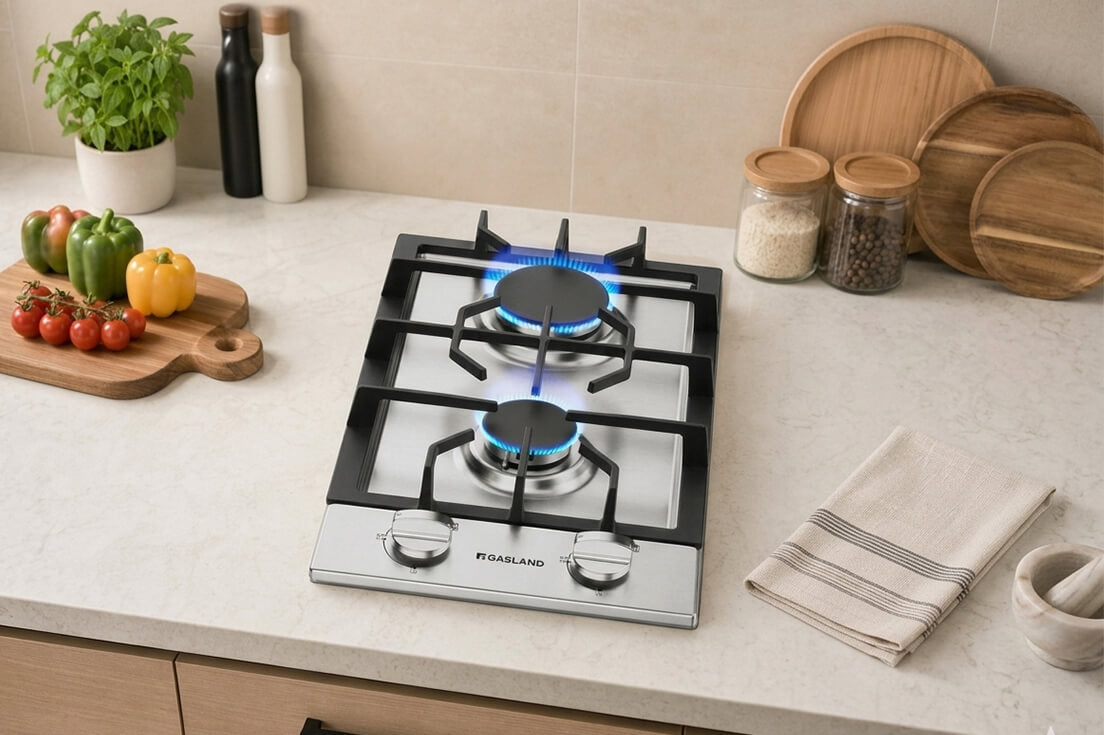
The GASLAND Chef Collection GH2305EF with its mirror-finish black enamel panel and backlit LED control knobs creates exactly this kind of kitchen presence. The warm amber glow of the active burner indicators, the gleam of the continuous cast iron grates, the quiet confidence of a cooktop that looks as good as it performs—these details matter on a morning when you’re trying to create something memorable.
Explore the full Gas Stovetop Collection to find the right combination of burner configuration and surface finish for your kitchen.
🧹 Quick Cleanup: Back to Mom in Minutes
The best part of cooking on a glass stovetop for Mother’s Day? The cleanup takes minutes, not an hour. While traditional gas cooktops require removing and soaking cast iron grates, scrubbing drip pans, and cleaning around burner ports, a glass surface wipes clean with a damp microfiber cloth for fresh spills—and a glass cooktop scraper plus cleaner for anything that baked on during cooking.
Post-Brunch Cleanup Routine (10 Minutes)
- Allow the surface to cool completely—approximately 15–20 minutes after the last burner is turned off
- Wipe fresh crêpe batter or hollandaise drips with a damp microfiber cloth
- For any baked-on residue, use a glass cooktop scraper at 30–45° in short, controlled strokes
- Apply a small amount of glass cooktop cleaner to a microfiber cloth and clean in circular motions
- Buff dry with a clean cloth for a streak-free, mirror finish
Ten minutes of cleanup, and the kitchen is restored. The rest of the morning belongs to Mom.
🍰 Complete Mother’s Day Brunch Menu
Here’s a complete brunch menu designed around your glass stovetop’s burner configuration:
| Dish | Burner | Heat Level | Cook Time |
|---|---|---|---|
| Classic French Crêpes | Simmer Burner | Low-Medium | 60–90 sec each |
| Hollandaise Sauce | Simmer Burner | Low | 10–15 min |
| Poached Eggs | Medium Burner | Medium-Low | 3–4 min each |
| Warm Canadian Bacon | Medium Burner | Low | 2–3 min |
| Fresh Berry Compote | Simmer Burner | Low | 8–10 min |
For baked additions—scones, a quiche, or a fruit tart—pair your stovetop with a GASLAND 30" Gas Wall Oven for precise, even baking that completes the brunch spread without monopolizing stovetop space.
Frequently Asked Questions
What temperature should I cook crepes at?
Crêpes cook best at medium-low heat—approximately 325°F to 375°F on the pan surface. A precise simmer burner set to low-medium maintains this temperature consistently across an entire batch without constant adjustment.
How do I prevent butter from burning when making crepes?
Use clarified butter (ghee) instead of whole butter—it has a higher smoke point and won’t brown as quickly. Brush the pan lightly between each crêpe rather than adding a full pat each time. A steady, low simmer burner flame prevents hot spots that cause uneven browning.
Can I make eggs Benedict on a gas stovetop?
Yes—and a multi-burner gas stovetop makes it significantly easier. Run poaching water on one burner, hollandaise on the simmer burner, and Canadian bacon on a third. The precise simmer burner is critical for hollandaise, which must be held at 140°F–160°F to emulsify without scrambling.
How do I clean a enamel stovetop quickly after cooking?
Allow to cool completely, then wipe fresh spills with a damp microfiber cloth. Use a glass cooktop scraper for baked-on residue, followed by a non-abrasive glass cooktop cleaner. The smooth glass stovetop surface cleans in minutes—far faster than traditional grates and drip pans.
What is a precise simmer burner?
A precise simmer burner is a low-output burner (typically 4,000–5,000 BTU) engineered for consistent low-flame performance. It’s ideal for hollandaise, chocolate melting, crêpe cooking, and keeping finished dishes warm without overcooking—the essential tool for delicate Mother’s Day brunch recipes.
🌸 Give Mom the Morning She Deserves
The perfect Mother’s Day brunch isn’t about complexity—it’s about care. It’s about the patience to rest the crêpe batter overnight, the attention to hold the hollandaise at exactly the right temperature, and the thoughtfulness to have the kitchen clean before she finishes her coffee. A glass stovetop with a precise simmer burner makes all of this achievable—and makes the kitchen itself a beautiful part of the celebration.
Explore the full GASLAND Gas Stovetop Collection and find the cooktop that makes every morning—not just Mother’s Day—feel like a special occasion.